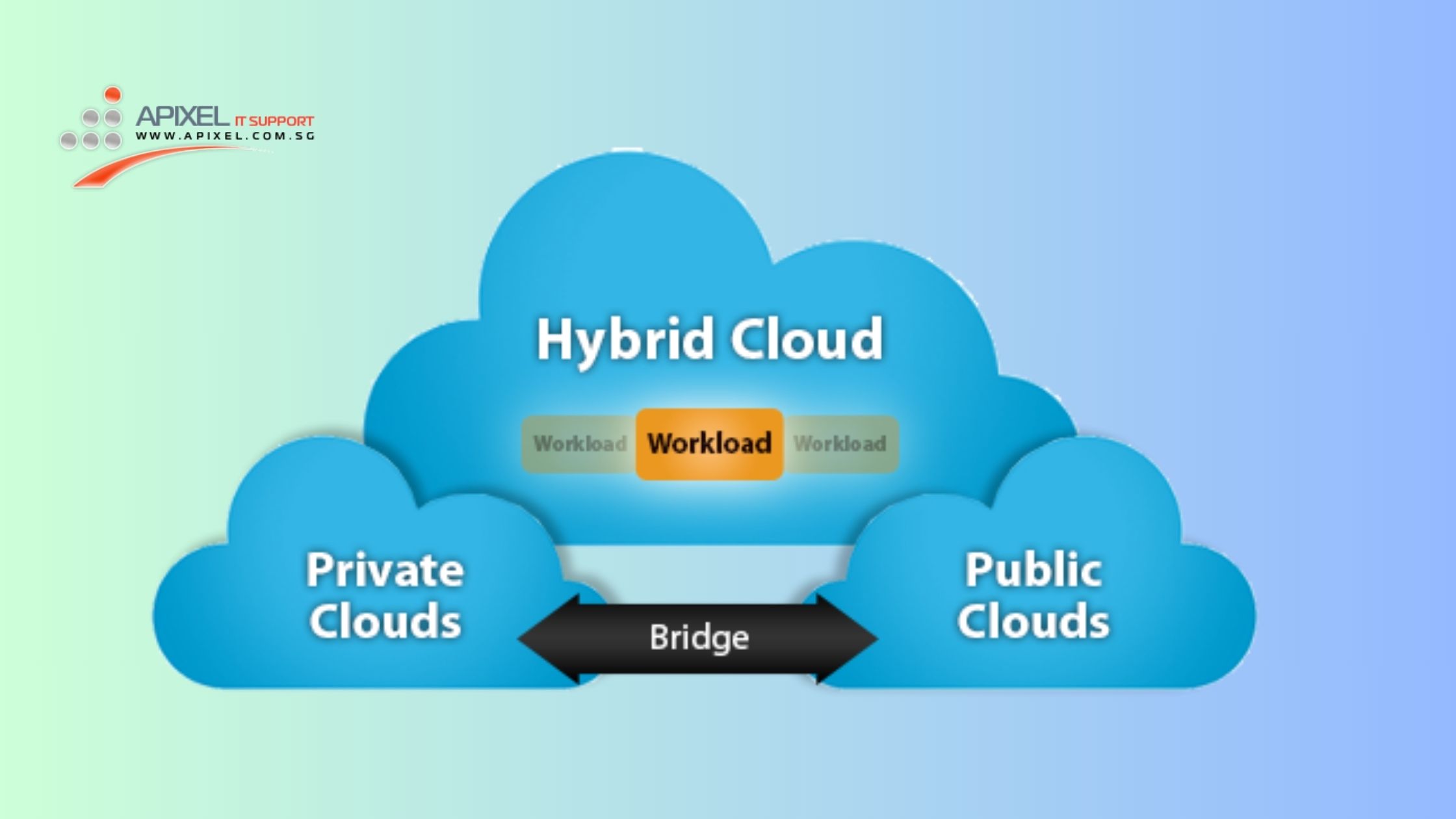
Businesses mainly utilize hybrid cloud computing in today’s digital environment in order to strike a perfect balance between cost-effectiveness, flexibility, as well as scalability. However, integrating public cloud environments with on-premises systems also showcases special security problems. Organizations must adhere towards tried-&-true best practices generated especially for hybrid environments in order to safeguard data, applications, as well as workflows.
These are the best possible practices you can have for having better security in Hybrid Cloud Computing:
Make Identity & Access Management (IAM) stronger
One of the central security problems with a hybrid cloud is access control. Put role-based access, multi-factor authentication, as well as least-privilege concepts into daily practice. It doesn’t matter whether it takes place on internal servers or the cloud, centralized IAM systems support in keeping an eye on every login attempt in order to make sure that only authorized users may access vital resources.
Encrypt data in Every Setting
In hybrid cloud computing, data regularly mainly moves between devices, workloads, & systems. Data that is encrypted while it is in transit & at rest can not be read, even in case it is intercepted. Make use of contemporary encryption standards & make sure key management is safe as well as unrelated to day-to-day activities.
Put Robust Network Segmentation inside the Place
Most of the times, clearly defined network boundaries are quite necessary for a hybrid structure. In the event of a breach, divide your network into segments in order to stop any undesired lateral movement. Firewalls, micro-segmentation, as well as virtual private networks guarantee the security of every single component linked to hybrid architecture.
Update & patch every component on a regular basis
Your whole hybrid environment may be vulnerable due to a single out-of-date software-version. So, it is a good idea to maintain regular patching schedules for virtual machines, cloud applications, middleware, as well as on-premises systems. Also, equipment for automated patch management are quite useful in hybrid systems that mainly run on different platforms.
Utilize Unified Security Tools to Monitor in Real Time
Visibility across all infrastructures is quite necessary for hybrid cloud computing. In order to identify threats in a faster manner, make use of cloud-native security platforms. Before they become more serious problems, unauthorized access attempts, suspicious activity, or any odd data transfer can be found with the support of continuous monitoring.
Perform Regular Compliance Checks with Auditory Actions
Industry relevant needs like HIPAA, ISO-certifications, or GDPR, must be followed in hybrid setups. Frequent security audits supports in terms of locating vulnerabilities, verifying that all settings adhere towards necessary standards with compliance gaps calculations. Documentation for legal as well as regulatory needs is also delivered through audits.
Generate a Disaster Recovery Plan Specifically to the Cloud
Business continuity can be pretty much assured by a robust disaster recovery plan. At the time of cyberattacks, or system failures, automated failovers, secure backups, as well as transparent recovery processes support in the speedy restoration of systems.